



Search Results:
If you’ve not found what you are looking for, then try our sister site, www.usedbooksearch.net
(millions of used books worldwide)
In order to get you the best possible price for second hand books online, usedbooksearch.co.uk aggregates/consolidates information about the top used book marketplaces.
(This means that we do not sell books directly)
When buying books online you have the product at your fingertips instead of getting in the car or on the bus and making the trek to the brick and mortar store. Buying second hand books online can be less expensive and it makes comparison-shopping much easier.
Given the choice of buying a used book for one dollar/pound/euro or twenty without any difference in quality….. which one are you going to go for?
Would you spend hours at your local used book store to find they have not got what you need on the shelf anyway?
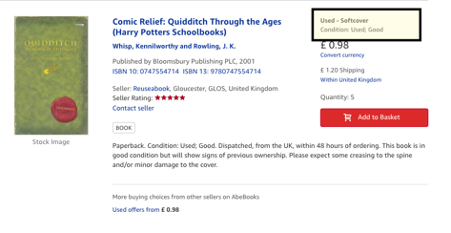
Abebooks has a page, where they explain the various Book Condition terms:
“Fine” and “As New” books should have no defects (although, Fine books do not have the ‘crisp’ feel that new books do)
For any of the terms below Fine (Very Good, Good, Fair or Poor), Abebooks states that “Any defects should be noted by the seller” – so, particularly in these cases, one should read the book description carefully, in order to understand any defects that a used book may have.
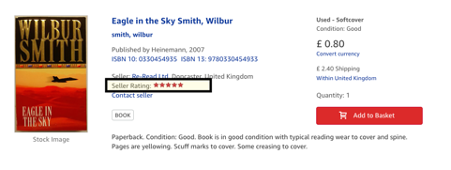
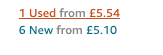
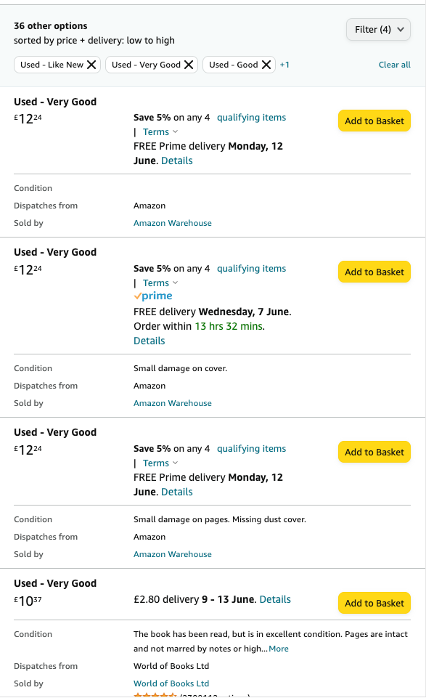
Remember, that unless it says Sold by: Amazon Media EU, Amazon is just acting as a marketplace for other sellers.
You therefore need to pay close attention to the information regarding these 3rd party sellers.
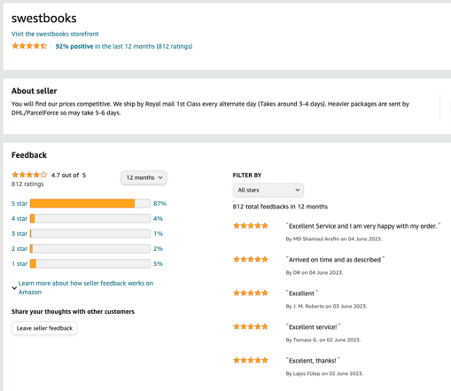
Click on the store link to go to the store page that stocks your book, and have a look at the Customer Feedback
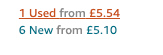
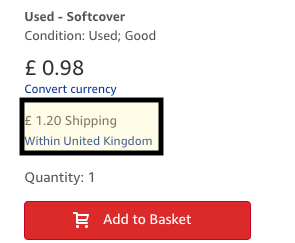
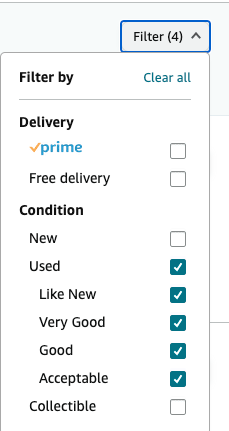
At this point, if you click on the Filter dropdown, you are able to Filter by sellers that include ‘Free Delivery’
If you find yourself regularly opting to buy books from Amazon, then it may be worth considering Amazon Prime.
And given that Amazon offers a 30 day free trial, there’s nothing to lose in trying it out anyway!
Amazon Prime offers:
“Unlimited One-Day Delivery on millions of items in the UK and Same Day Delivery in select areas” You can filter by books that are delivered with free one-day delivery, via Amazon Prime: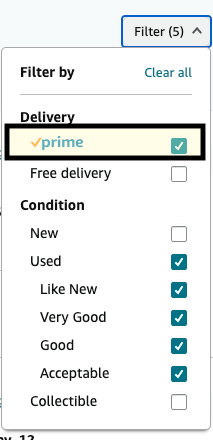
And, as an extra bonus for readers:
“Prime Reading lets you enjoy unlimited reading on any device, with over a thousand books, magazines, comics and articles.”
“Amazon First Reads allows you to choose one Kindle book of the six Editors’ Picks each month for no additional cost.”
We don’t want you to completely replace much-loved physical used books with e-books. However, for some incorporating both physical and e-books in to our lives (especially when travelling), can be a nice option.
Amazon provides extensive information about it’s returns policies here:
https://www.amazon.co.uk/b?ie=UTF8&node=20772621031
Most used books are bought from Amazon marketplace, rather than Amazon itself.
In which case, they will have their own returns policies. Amazon does state, however, that “The returns policy offered by Marketplace sellers must be equivalent to or better than the returns policy offered by Amazon.co.uk.”
For more information, you can read this page:
https://www.amazon.co.uk/gp/help/customer/display.html?nodeId=GV38326YW5JX9V9X
In addition to all of the standard payment methods, such as Debit Card and Paypal, you also have the option of paying by Amazon Gift Cards and Amazon Pay Balance.
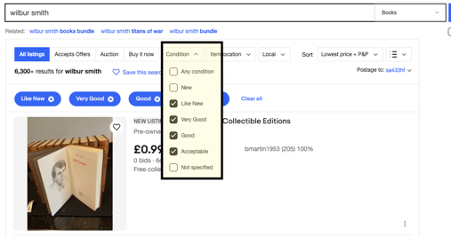
The filtering system here is easier than on Amazon, and isn’t possible on Abebooks or Alibris.
Each user on Ebay has a Feedback score, solely based on prior customer feedback.
Be sure to bear in mind how many users the feedback score is based on. 100% positive feedback from 1000s of people obviously holds more value than when based on just 5 people.
You can be confident with sellers that have a feedback score of 100% from 100s or 1000s of users.



If you then click on ‘See details’ you will see more details about the returns policy, including whether or not the item is covered by Ebay’s ‘Money Back Guarantee’ policy:
https://www.ebay.co.uk/help/policies/ebay-money-back-guarantee-policy/ebay-money-back-guarantee-policy?id=4210
Biblio is another second-hand book marketplace. It is targeted at book collectors and is an excellent place to go to for rare and collectible books.
Biblio’s condition classification is a little different to the other sites. They use “As New (AN)”, “Fine (F)”, “Good (G)”, “Fair” and “Poor”
Biblio has a detailed explanation of their Book Condition Classifications here:
https://biblio.co.uk/book-collecting/basics/how-to-read-bookseller-descriptions/
Don’t forget that it is the individual book sellers that are assigning these classifications.
In the case of more expensive, rare books, it would be worth ‘asking the seller a question’ to get more details, before committing to a purchase.
The ratings on Biblio are based on ‘order fulfilment rates’ for the previous 90 days, rather than customer reviews. “Order fulfillment is the percentage of orders placed with that seller which were filled.”
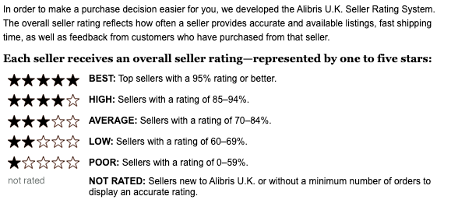
This is unlike the other sites, where user ratings are incorporated into the star system.
The delivery costs are clearly displayed underneath the book price on the search results pages of Biblio:
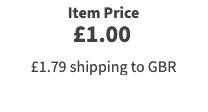
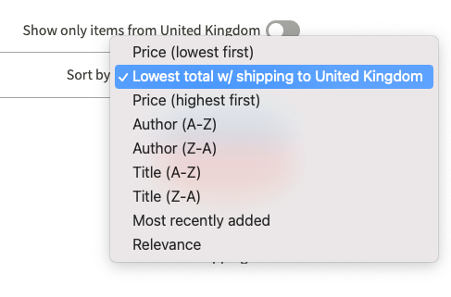
The delivery time is displayed once on the checkout page, and you can opt to pay more for expediated shipping.
Biblio offers a 30-day money back guarantee for peace of mind:
https://biblio.co.uk/pages/order_guarantee.html
Additionally, each individual book seller will have their own, varying terms, within this.
For example, booksellers will accept returns from customers who placed an order incorrectly, but others won’t. You will need to check the individual book seller page for their unique terms.
Blackwell’s is an online book store (it also has physical shops) that sells new books.
Their prices include delivery.
Their books are normally dispatched within 7 days, and then their delivery time is 2-4 days after dispatch.
They have a very simple, no-questions-asked returns policy.
Please note : We earn a commission when you make a purchase from following a link above